
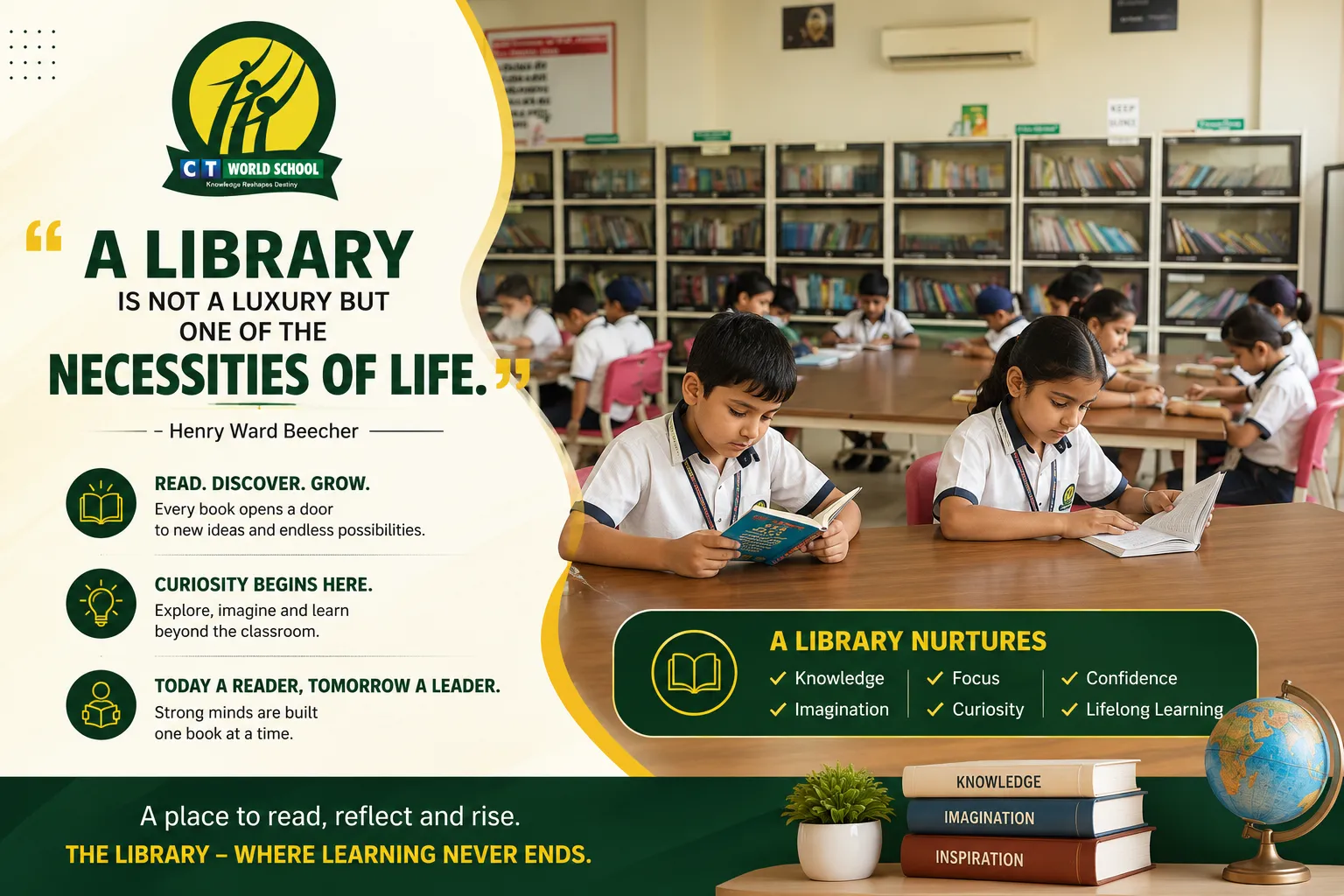
"A library is not a luxury but one of the necessities of life."
- Henry Ward Beecher
In today's digital world, where information is available at the click of a button, the importance of school libraries remains as strong as ever. A library is more than a room filled with books - it is a place where curiosity is encouraged, imagination comes alive and lifelong learning begins.
As a teacher, I have seen how regular reading shapes young minds. Students who spend time in the library not only improve their language and communication skills but also develop critical thinking, creativity and confidence. Every book they read introduces them to new ideas, cultures and perspectives that help them grow into informed and compassionate individuals.
Libraries also teach children the joy of independent learning. Unlike classrooms, where lessons follow a planned curriculum, libraries allow students to explore topics based on their interests. Whether they enjoy science, history, fiction or biographies, every book opens the door to knowledge and inspires them to ask meaningful questions.
A vibrant school library also nurtures essential life skills such as focus, patience and responsibility. It provides a peaceful environment where students can reflect, research and discover the pleasure of reading without distractions. These habits stay with them long after they leave school.
As educators and parents, we should encourage children to make libraries a regular part of their lives. A child who develops the habit of reading today becomes an adult who never stops learning because a library does not just help students pass examinations - it helps them discover a lifetime of possibilities.